Notches in Your Teeth: How Abrasion Can Lead to Abfraction Erosion
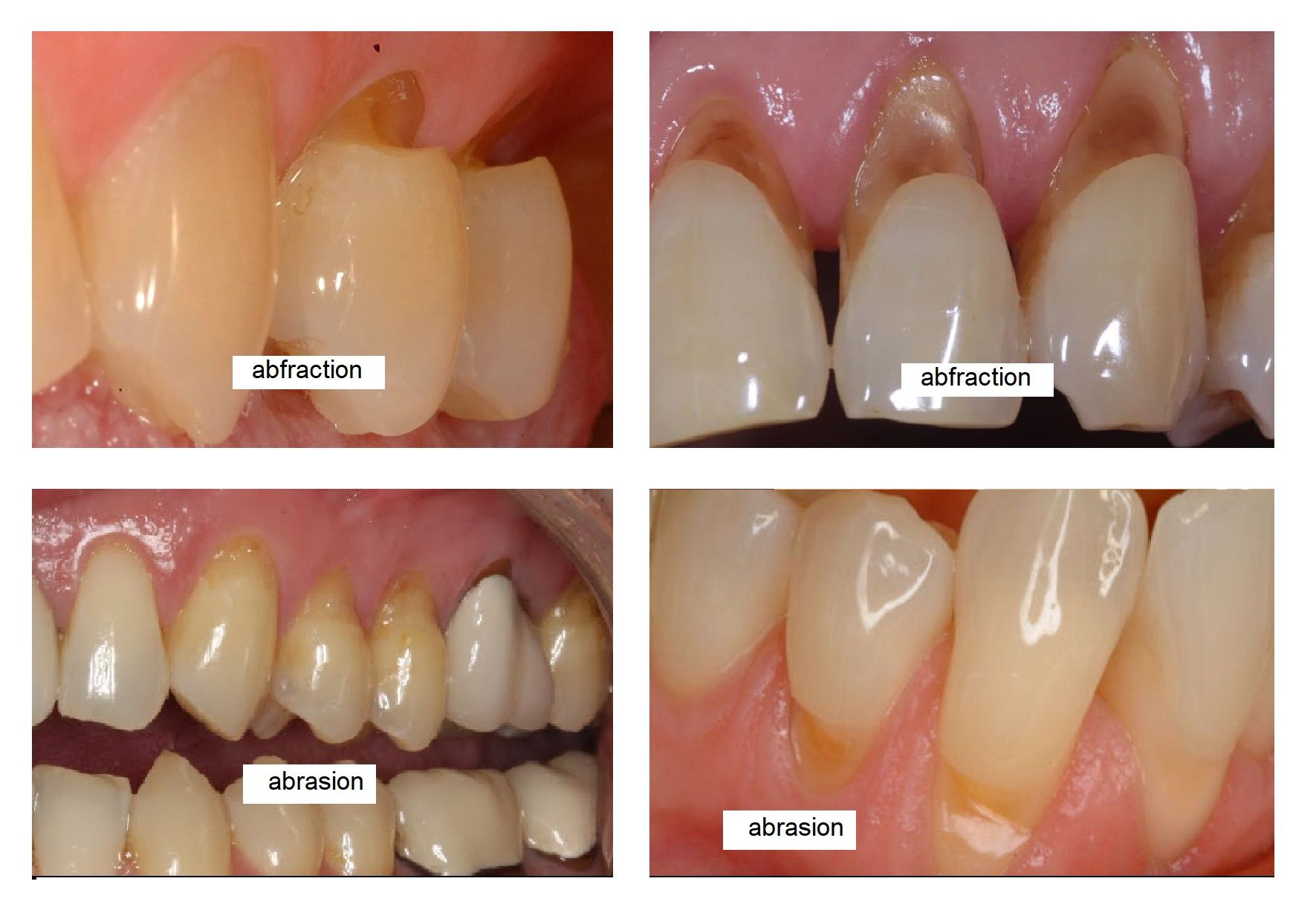
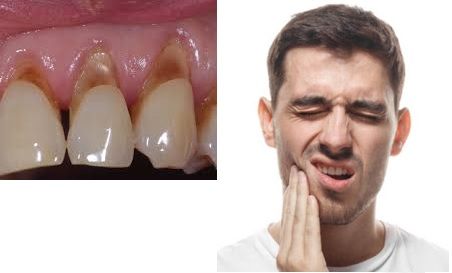
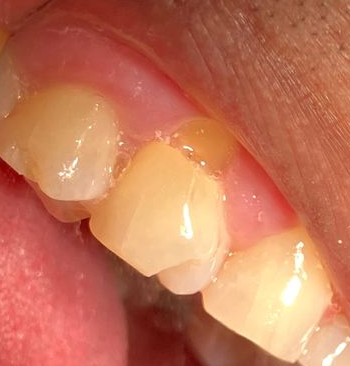
Notches near the gumline, also called non-carious cervical lesions, often have multiple contributing factors. Abrasion from aggressive brushing or abrasive toothpaste can weaken enamel at the gumline, making it more vulnerable. In some patients, biting forces and clenching may further stress the weakened area, a process sometimes referred to as abfraction. Acid exposure from foods, drinks, or stomach acid (erosion) can also soften enamel, allowing these lesions to progress more quickly. Together, these factors can lead to the notches, sensitivity, and wear that patients often notice.
What Are These Notches?
Most dentists recognize these lesions as multifactorial, involving abrasion, chemical erosion, and possibly occlusal stress they are called non-carious cervical lesions—meaning tooth damage that isn’t caused by decay. Two of the most common contributors are:
- Abrasion – mechanical wear from outside forces
- Abfraction – structural breakdown caused by stress and flexing of the tooth
- Erosion - Acid exposure from diet or reflux can also soften enamel, making abrasion and stress-related damage more likely
While they’re often talked about separately, in real life they frequently work together.
Abrasion: The Starting Point
Abrasion is physical wear caused by repeated friction. Common causes include:
- Brushing too hard
- Using a hard-bristled toothbrush
- Abrasive toothpastes (especially whitening pastes)
- Aggressive horizontal “scrub” brushing
- Habits like holding objects between your teeth
Over time, abrasion slowly wears away the enamel near the gumline. This area is especially vulnerable because the enamel is thinner there to begin with.
At first, abrasion may just cause slight roughness or sensitivity. But as enamel thins, something more important happens.
Three Important tips to avoid tooth-brush abrasion
- Use a soft tooth brush
- proper brushing technique
- switch to gel instead of a paste gels do not contain silicates less abrasive
- come in for routine check ups
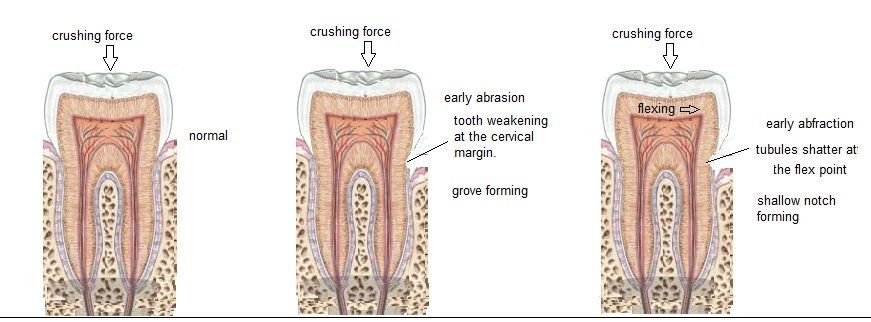
How Abrasion Sets the Stage for Abfraction
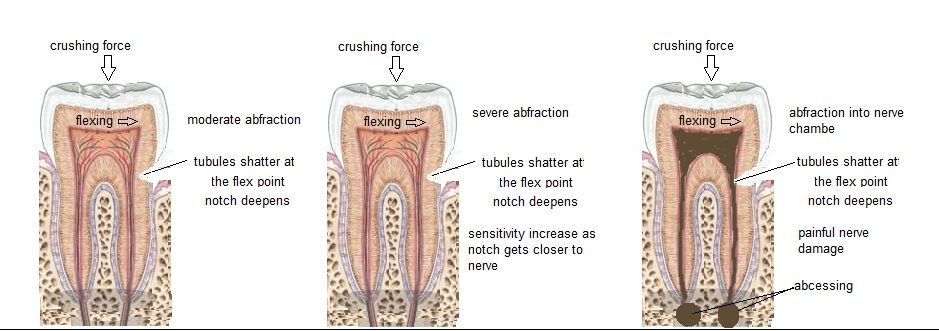
Teeth aren’t rigid blocks of stone—they flex slightly every time you bite, chew, or clench. Under normal conditions, enamel can handle these forces. But when abrasion weakens the tooth at the neck (the cervical area), stress becomes concentrated in that weakened spot.
This is where abfraction begins.
As biting forces travel through the tooth, they focus on the already worn area. Microscopic cracks form, and small pieces of tooth structure begin to break away—not from brushing, but from stress.
In other words:
Abrasion thins and weakens the tooth → stress concentrates → abfraction causes the notch to deepen and sharpen.
That’s why these lesions often look angular or wedge-shaped rather than smooth.
Signs You May Have Abrasion, Abfraction, and Erosion
- Visible notches or grooves near the gumline
- Tooth sensitivity to cold, air, or brushing
- Sharp edges you can feel with your fingernail
- Gums that seem to recede around the notch
- No signs of decay, yet the defect keeps getting larger
Left untreated, these areas can deepen enough to affect the inner tooth structure, increasing the risk of pain, fractures, or the need for more extensive dental treatment.
Why Simply “Brushing Better” Isn’t Enough
Switching to a softer brush and gentler technique is essential—but once abfraction starts, brushing alone won’t stop it. Bite forces, clenching, grinding, and tooth alignment all play a role.
That’s why proper treatment focuses on:
- Reducing abrasive habits
- Protecting the tooth from stress
- Restoring lost tooth structure when needed
In some cases, night guards or bite adjustments may be recommended to reduce ongoing stress.
Tooth Erosion
Dental erosion occurs when acids soften the tooth surface, starting at a pH below about 5.5. Enamel begins to demineralize at this level, while dentin — the layer beneath enamel — is even more vulnerable and erodes faster. Frequent exposure to acidic foods, drinks, or stomach acid can accelerate wear, making teeth more prone to notches, sensitivity, and structural loss. (PubMed)
Treating and Preventing Further Damage
Depending on severity, treatment may include:
- tooth colored restorations to protect the weakened area
- Bite guards for clenching or grinding
- Brushing instruction with non-abrasive toothpaste
- Adjusting the bite forces evenly on teeth occlusal equilibrium
The key is catching these lesions early—before abrasion turns into structural breakdown.
Notches near the gum line are usually caused by tooth wear from abrasion, abfraction, or erosion—not cavities. These conditions weaken enamel over time and can expose dentin.
No. Most gumline notches are not cavities. They are forms of mechanical or chemical tooth wear and do not involve bacterial decay.
Abfraction is caused by bite stress and tooth flexing, while abrasion is caused by external wear such as aggressive brushing or abrasive toothpaste.
Yes. Brushing too hard, especially with a hard-bristled toothbrush, can wear away enamel and contribute to abrasion at the gum line.
Yes. Acidic foods and beverages lower oral pH and can dissolve enamel, leading to dental erosion over time.
When enamel is worn away, the underlying dentin becomes exposed. Dentin contains microscopic tubules that transmit temperature and pain signals.
Yes. Tooth wear is progressive. Without addressing the cause, notches can deepen and increase sensitivity or the risk of tooth fracture.
Not always. Fillings may be recommended when sensitivity is significant, tooth structure is compromised, or the defect continues to progress.
Yes. Excessive biting forces from grinding or clenching can cause teeth to flex, leading to stress-related enamel loss near the gum line.
Prevention includes gentle brushing with a soft toothbrush, limiting acidic foods and drinks, treating acid reflux, and wearing a nightguard if you grind your teeth.
The Bottom Line
Notches in your teeth aren’t just cosmetic, and they aren’t always cavities. Abrasion often starts the damage, but abfraction is what allows it to progress.
By understanding how these two processes work together, you can take steps to protect your teeth, reduce sensitivity, and avoid more serious problems down the road.
#RiverviewDentist#33578DentalCare#RiverviewDentalHealth#NonCavityToothCare#RiverviewFamilyDentist#DentalErosionTreatment#ToothSensitivityHelp#GentleDentistRiverview#SmileCare33578#ToothWearSolutions#AbfractionAwareness#RiverviewDentalExperts#PreventToothDamage#hangnails#tooth notches
If you’re noticing changes near your gumline, it’s worth having them evaluated sooner rather than later—your teeth will thank you.